Showing posts with label rice. Show all posts

Tuesday, April 21, 2020

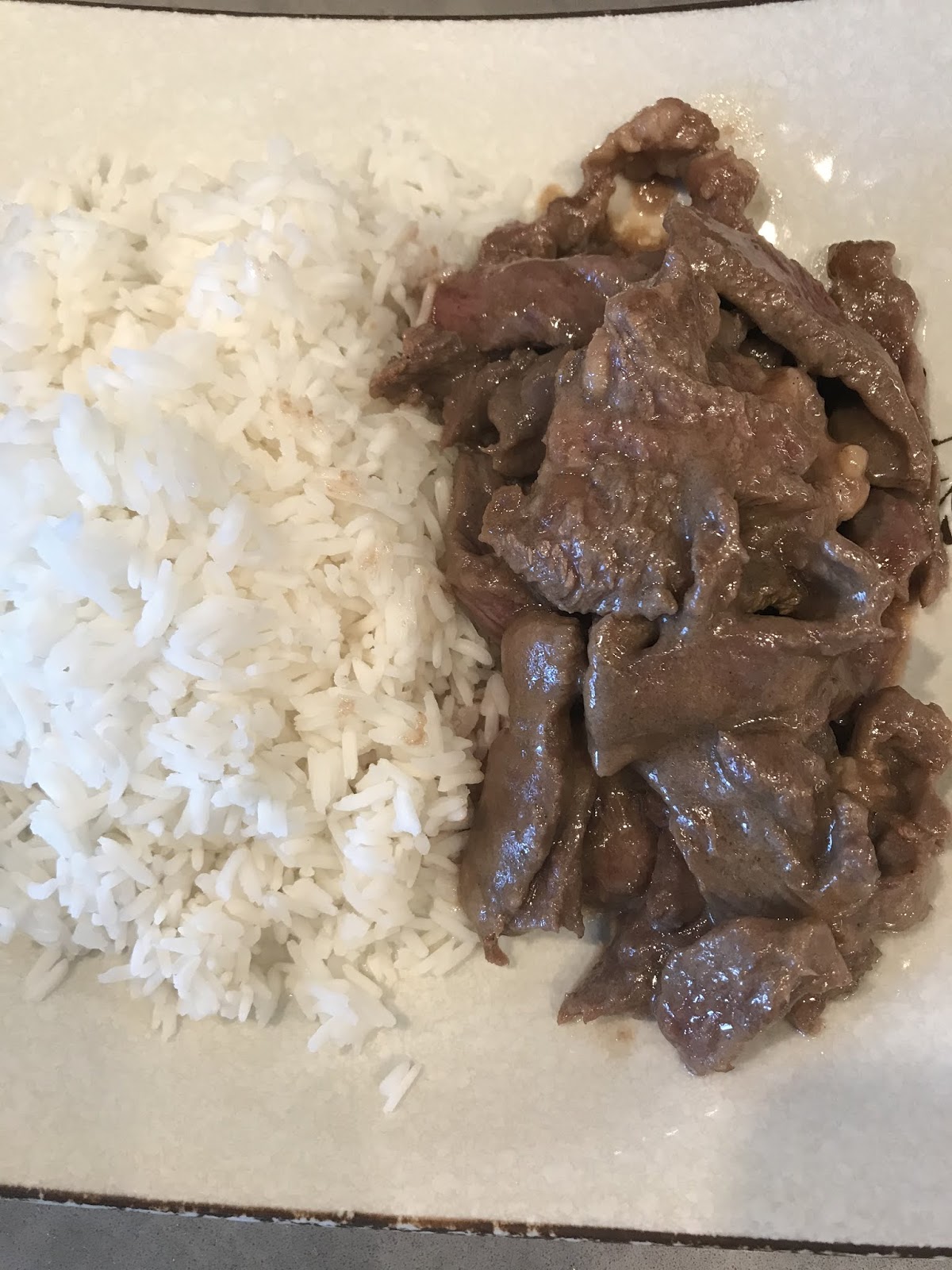
Smooth Scrambled Egg and Beef on Rice 滑蛋牛肉飯


INGREDIENTS:
250 gram Beef
8 Eggs
3 bowls Cooked Rice
6 tablespoons Vegetable Oil (for frying) 

MARINADE:
4 tablespoons Soy Sauce
1 tablespoon Sugar
1 teaspoon Corn Starch
1 tablespoon Chinese Cooking Rice Wine

DIRECTION:
1. Cut the beef into 1/2 cm thin slices across the grains.

2. In a mixing bowl, add the beef and the marinade. Mix well. Let it marinate for 30 minutes in the fridge. 


3. In another bowl, whisk the eggs.


4. Heat up 3 tablespoons of vegetable oil over high heat. Add beef and saute until it turns colour; about 5-7 minutes. (If you want the beef throughly cooked, saute for another 2-3 minutes)


5. Quickly transfer the beef onto the serving plate.


6. Rinse and dry the pan quickly. In the same pan, heat up the rest of the vegetable oil over medium heat. Add egg. Quickly scramble until the egg just starts to coagulate. Turn off the heat. Use the remaining heat to cook the egg until it is just cooked but still a little runny.


7. Pour the egg onto the beef. Serve with steamed rice.


Monday, April 20, 2020

Lentil rice


A few months ago, my family has started to reduce the meat consumption.  So I've tried to add various types of pulses in our diet to make up the protein.  Lentils are by far our most favourite other than chickpea.  I add them in salad, soup, and rice.  This recipe is rather simple.  You just need to make a batch of lentils and a batch of rice, and then combine the two.  For the lentils, we like Puy lentils since they hold their shapes better and they give a firmer bit.  Otherwise, green lentils are also a good option in this recipe.


INGREDIENTS:
2 cups Basmati Brown Rice
 6 cups cups Water
1 cup Green Lentils
Salt to taste

DIRECTION:
1. Rinse lentils until running water drain.  In a pot, combine lentils and two cups of water together; add 1/4 teaspoon of salt.  Cover it with the lid.  Bring it to a boil over high heat and then reduce the heat to a simmer.  Let it cook for 15 minutes and the liquid is absorbed.  Remove the pot from the heat; set it aside.

2. Rinse brown rice under running water twice; drain well.  In another pot, add the rice and 4 cups of water.  Add a pinch of salt.  Bring the pot to a boil over high heat.  When the liquid reduces in half, cover the lid.  Turn the heat too low.  Continue to cook for 25 minutes until the rice is fluffy and the liquid is totally absorbed.

3. To serve, combine the lentils and brown rice. 


Barley Lentil Rice with Cranberry and Pine Nut


INGREDIENTS:
2 cups Pot Barley
1 cup Green Lentils
1/3 cup Long Grain Basmati Rice
1 cup Cranberries, dried
4-5 Pecans, crushed
1/4 cup Pine Nuts
1/3 teaspoon Curry Powder
1/3 teaspoon Garam Masala Powder
1/3 teaspoon Salt
1 teaspoon Olive Oil

DIRECTION:
1. Combine barley, lentils, basmati rice in a pot.  Rinse a few times until the water is no longer milky. Drain and then add double amount of the water.

2. Add cranberries, pecans, pine nuts, curry powder, garam masala and salt in the pot.  Bring the liquid to a boil over high heat.  When the water starts to bubble, reduce the heat to the lowest and put the lid on.  Let it cook for 20 minutes.  Turn off the heat and leave it for another 10 minutes without opening  the lid.

3. When the time is up, open the lid and add olive oil.  Gently fluff the barley lentil rice with a spatular.  Serve immediately.


Chinese Preserved Meat and Taro Rice 臘味芋頭飯


INGREDIENTS:
1 Large Taro
2 Chinese Preserved Black Sausage
2 Chinese Preserved Red Sausage
1 Chinese Preserved Pork belly
4 Bowls Cooked Rice
4 tablespoons Vegetable Oil
1/2 teaspoon Salt
1 teaspoon Sugar
1 tablespoon Chinese Cooking Rice Wine

DIRECTION:
1. Cut off and discard the taro skin. Dice the taro. Set aside.

2. Dice the preserved sausages and pork belly.

3. In a large wok, heat up the cooking oil over high heat. Add sausages, pork belly, and taro. Stir fry until it is fragrant.

3. Drizzle cooking wine. Add sugar and salt; stir well.

4. Add cooked rice. Gently stir until the rice is cooked with the sauce and it is well mixed with the meat. Turn off the heat.


Tuesday, February 25, 2020

Pineapple Beef on rice 菠蘿炒牛肉


This is a very common dish in Hong Kong where you can easily find it in 'Cha Chaan Teng'.  Making it at home is also very simple and straightforward.  If you want to pull out a quick but healthy meal for the family during the week, it is a wonderful dish.  I'd say it's a children's favourite.

However, the enzyme in pineapple break down the protein in meat very quickly, so try to serve right after cooking.  Otherwise, the meat is going to be mushy.

INGREDIENTS:
1 Pineapple, ripened (you can use canned pineapple)
1 piece of Steak
2 tablespoons Chinese Cooking Rice Wine
1 tablespoon Sugar
2 tablespoons Vegetable Oil
Steamed Rice (for serving)
Check out here to see how to cook rice in a pot

MARINADE:
1 Egg
2 tablespoons Soy Sauce
2 tablespoons Chinese Cooking Rice Wine
1/3 teaspoon White Pepper Powder
1 tablespoon Sugar
1/2 teaspoon Cornstarch
1/3 teaspoon Salt

DIRECTION:
1. Slice the beef into about 1/2 cm thick pieces.  Add them in a mixing bowl.  Combine them with the marinade.  With hand, mix it gently until the liquid is absorbed by the meat.  Set aside and allow it to marinate for about 20 minutes.

2. Cut off both ends of the pineapple.  Stand it up.  Cut the skin off from top to bottom along the curve of the pineapple.  Cut off and discard the hard core.  Then, cut the pineapple into bite size.  (You don't want the pineapple to be too small because it will produce too much liquid during cooking).  Set the pineapple aside.

3. Heat up the oil in a large pan over high heat.  Add the beef.  Stir fry until the beef starts to turn colour; about 2-3 minutes.  Add rice wine and sugar.  Stir fry for another minute.

4. Add the pineapple.  Quickly stir fry until the beef is medium-rare and the pineapple is heated through.  Transfer the mixture to the serving plate and serve it with steamed rice.


Thursday, February 20, 2020

Scrambled Egg with Tofu


INGREDIENTS:
2 blocks Pressed Tofu, cubed
5 Eggs, whisked
2 tablespoons Ketchup
1 teaspoon Sugar
1/2 teaspoon Salt
Vegetable Oil (for frying)

DIRECTION:
1. Heat up about 3 tablespoons of vegetable oil over high heat. When it smokes, add the eggs and fry until it is cooked.

2. Add the press tofu. Stir fry until it is hot.

3. Add ketchup, sugar and salt. Stir well and transfer the food onto the serving plate.

You can serve it with steamed rice.

Monday, September 23, 2019

Healthy Shrimp Rice 營養蝦飯


INGREDIENTS:
12 Shrimps, shelled and deveined
2 Green onions, roughly chopped
1 cup Corn Kernels
2 Eggs
1/2 teaspoon White Pepper Powder
1/2 teaspoon Salt
1 tablespoon Sugar
1 tablespoon Garlic Powder
3 tablespoons Vegetable Oil
2 tablespoons Mayonnaise
4 bowls Cooked Rice

DIRECTION:

Friday, February 15, 2019

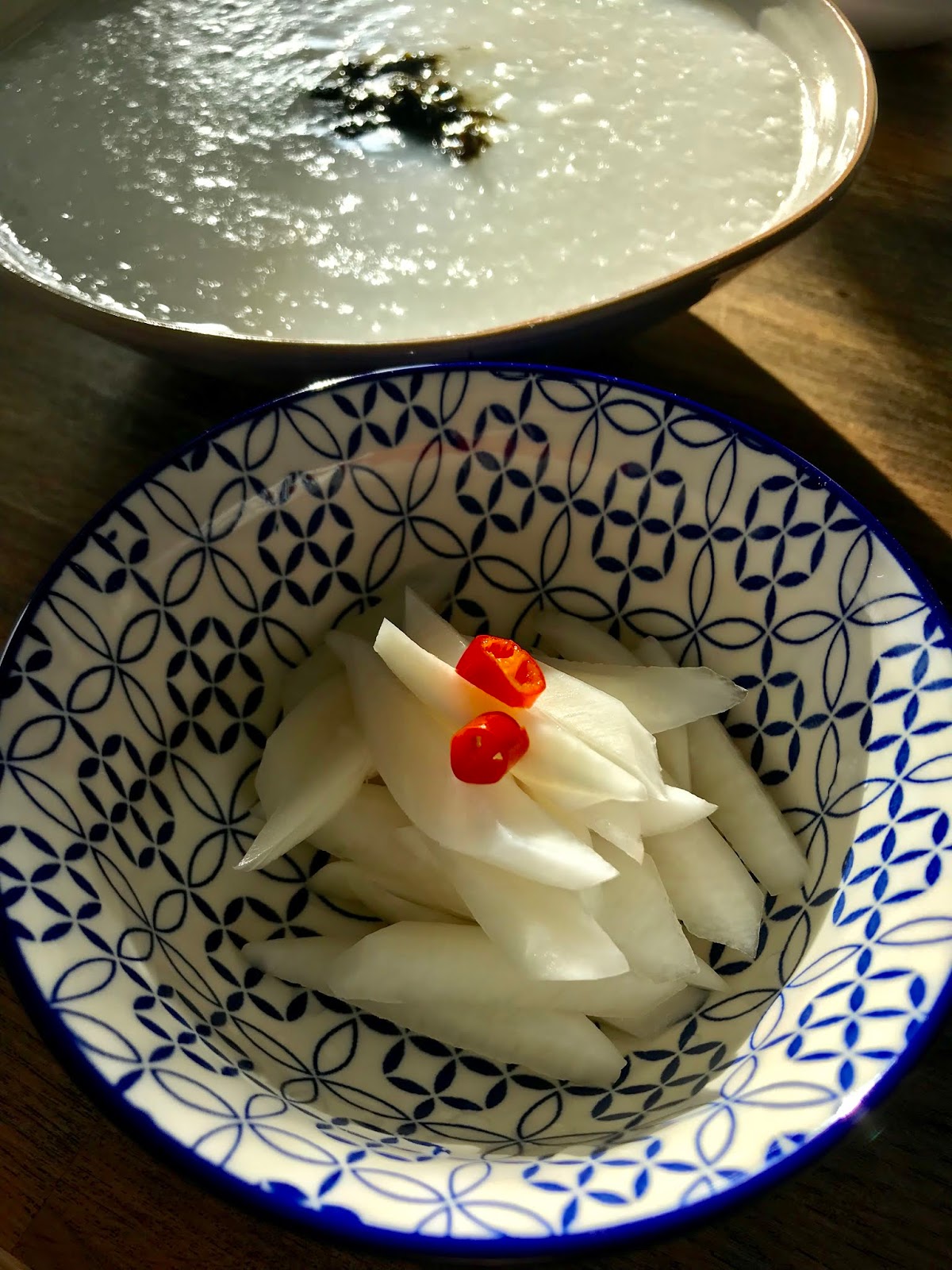
Simple Congee |簡易白粥


Nothing is better than a bowl of hot plain congee when we are sick.  It is kind of like chicken noodle soup in the American culture.  The recipe is simple.  You just need to boil the rice grains until they break down.

Congee is also a common meal in Hong Kong and it isn't necessarily always eaten plain.  We like to add chicken, fish, ground beef, intestines, or even pig's blood (a type of jelly form that's made of pig's blood).  People also like to eat congee with deep fried pastries and elaborate condiments, like pickles or dips of soy sauce.  I like mine with Chinese preserved olive leaves.

INGREDIENTS:
1 cup Jasmin Rice
6 cups Water
Salt to taste

材料:
1 杯  水仙米
6 杯  水
調味  鹽

DIRECTION:
1. Rinse the rice with a few changes of water until the water becomes clear.

2. In a deep pot, combine rice and water.  Bring it to a boil over high heat, and then reduce the heat to medium-high.  With the lid half opened, continue to boil until the rice totally breaks down; about 40 minutes.  Season it with salt.

做法:
1. 米過水洗淨。

2. 在一只深鍋內,加入米和水。用大火煮滾,再將火調底至中大火。蓋上鍋蓋,鍋蓋要半醃,繼續煮若40分鐘或至把飯煮爛。下鹽調味。


Saturday, February 9, 2019

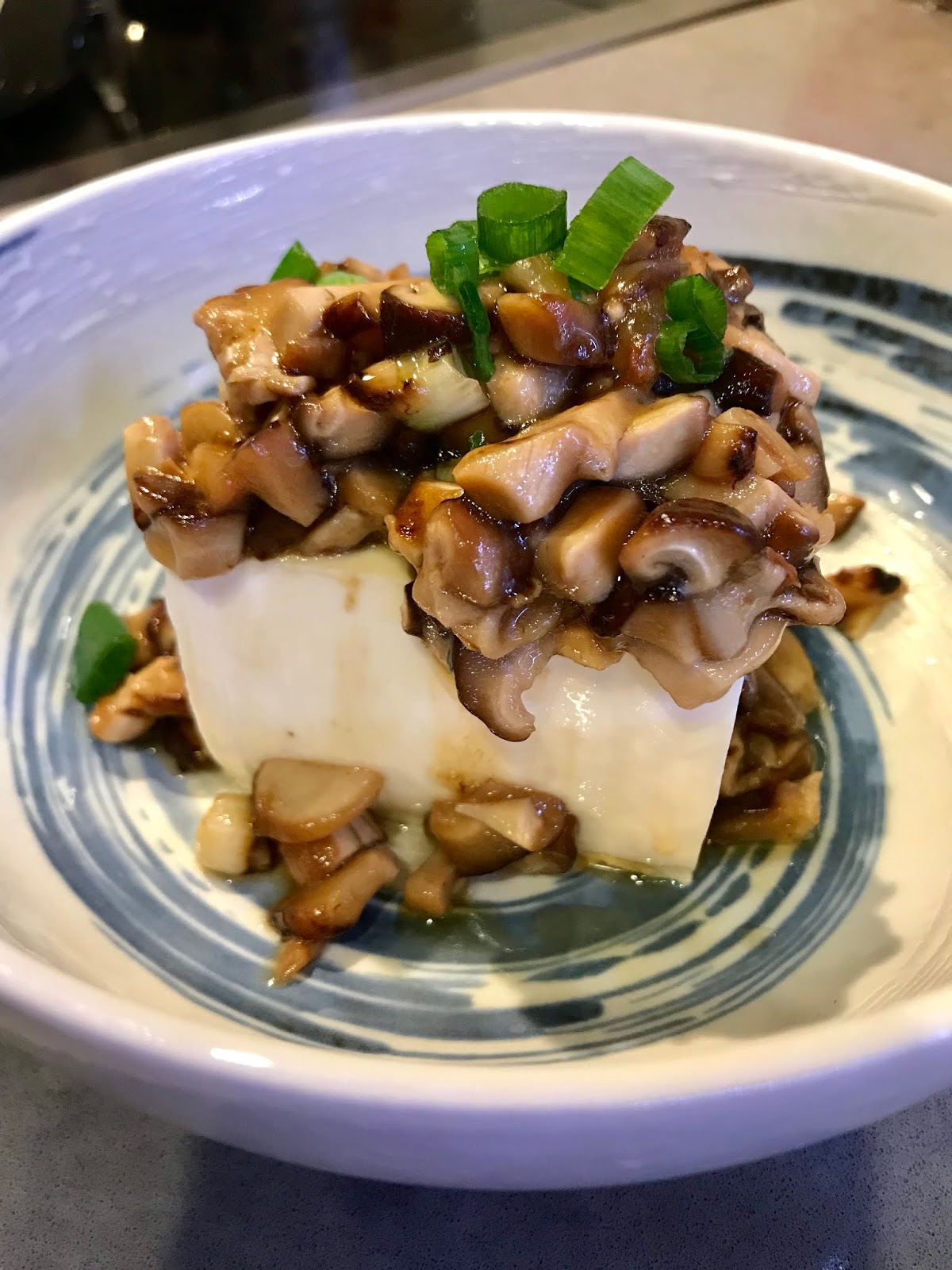
Soft Tofu with Shiitake Mushroom Sauce 素蠔油花菇配嫩豆腐


A simple yet delicious shiitake mushroom topping that can be paired with a block of silken tofu or steamed rice.

INGREDIENTS:
8 Fresh Shiitake Mushrooms, roughly chopped
1 block Soft Tofu
1.5 inch long Ginger, peeled and finely chopped
4 Garlic Cloves, peeled and finely chopped
1 Stalk Green Onion (optional), thinly cut
2 tablespoons Vegetable Oil

SEASONING:
2 Tablespoons Chinese Cooking Rice Wine
2 tablespoons Vegan Oyster Sauce
1 teaspoon Corn Starch
1/3 teaspoon White Pepper Powder
2 tablespoons Sugar
1/3 teaspoon Salt

材料:
8 隻  鮮冬菇,切粒
1 磚  嫩豆腐
1.5 吋長  薑,去皮,切幼粒
4 瓣  蒜頭,去皮,切幼粒
1 棵  蔥 (隨意),切幼粒
2 湯匙  菜油

調味料:
2 湯匙  米酒
2 湯匙  素蠔油
1 茶匙  粟粉
1/3 茶匙  白胡椒粉
2 湯匙  糖
1/3 茶匙  鹽

DIRECTION 做法:
1. Heat up vegetable oil over medium heat.  Add ginger and garlic; fry until fragrant and the garlic turns slightly brown.

2. Add mushrooms; stir fry for about 5 minutes.

3. In a small bowl, mix the seasoning together. Stir it into the mushrooms; continuously stir fry until the liquid is nearly absorbed and the sauce has thickened.  Pour the mushroom over the tofu.  Sprinkle the green onion and serve immediately.

1. 菜油用中燒熱。下薑和蒜粒,煮至香氣四溢和蒜粒轉微黃色。

2. 下冬菇;炒若沒有分鐘。

3. 在一只小碗中加入所有調味料;拌勻然後倒入鍋中。繼續炒冬菇直至汁半收乾。關火;把冬菇放到豆腐上。


It is also very delicious to put on rice.


Friday, December 7, 2018

Chicken with Tomato Alfredo Sauce on Rice


If you are tired of curry, try this tangy and creamy tomato Alfredo.  As we often say, everything tastes better with a little ketchup on it.  It is proof again in this tangy chicken.


INGREDIENTS:
2 lbs Whole Chicken Wings, cut into three segments
3 Carrots, cut into bite size
1 Red Onion, chunks
5 Garlic Cloves, peeled and mashed
1 can Chickpea, drained and rinsed the chickpeas
2 tablespoons Flour
1/4 cup Butter
3 tablespoons Vegetable Oil
1 tablespoon Chinese Cooking Wine (optional)
1 cup Milk, 2%
1/3 cup Ketchup
3 tablespoons Worcester Sauce
2 tablespoons Sugar
Salt

DIRECTION:
1. Combine garlic, carrot, butter and vegetable oil in a deep pot.  Heat them up over medium heat until the garlic is fragrant and the carrots are nicely browned.

2. Turn the heat to high; add chicken.  Stir fry until the chicken starts to turn colour, about 10 minutes.  Add cooking wine and allow it to be absorbed.

3. Sprinkle the flour onto the chicken while stirring.  Then quickly add in milk.  Reduce the heat a little if the sauce thickens too quickly, and add more milk if needed.

4. When the sauce comes to a boil, add chickpea and onion.  Continuously cook until they heat through and the onion is slightly softened, about 10 minutes.  Season with Sugar, salt and Worcester sauce to taste.  It is delicious to serve with brown rice, pasta or naan bread.


Friday, November 30, 2018

Stir Fried Barley with Salmon and Tofu


Barley is a staple in our household.  We love both pot barley or pearl barley.  We like to add it to salad greens, add it into soup, or make flavoured rice.  This salmon and tofu stir fry is the recipe my 6 year old son loves best that he said he wants to pack for lunch everyday.  It's composed of pressed tofu, salmon and Brussel sprouts.  Feel free to substitute other ingredients that you enjoy.

INGREDIENTS:
2 cups Pot Barley
3.5 cups Water
1 Salmon, deboned (I keep the skin)
3 squares Pressed Tofu
10 pcs Brussel Sprouts
4 Stalks Green Onion

SEASONING:
4 tablespoons Light Soy Sauce
1-2 tablespoons Chinese Cooking Rice Wine
1 tablespoon Sugar (option)
3 tablespoons Ketchup
Salt to taste

DIRECTION:
1. To cook the barley, rinse it with two changes of water; drain.  Combine the barley with the 3.5 cups of water.  Bring it to a boil over high heat and boil until the water is half absorbed.  Cover the pot with the lid and turn the heat to low.  Continuously boil for another 20 minutes and the water is totally absorbed, remove the pot from the heat.  Let it stand for 10 minutes before fluffing it.

2. In a non-stick frying pan, add some oil.  Lay the salmon in it with its skin side down.  Fry it over medium-high heat until the salmon is fully cooked.  Break apart the salmon with a spatula.

3. Add cooked barley, tofu, and brussel sprout. Stir fry until it heats up and then add the seasoning.  Stir fried for another 10 minutes and remove it from the heat.  Serve immediately.


Thursday, June 21, 2018

Tomato Beef Egg Drop Soup with Rice | 蕃茄牛肉蛋花湯飯


Almost every family has its own recipe for egg drop soup.  Although the basic ingredients are around tomatoes, beef, and egg, there are so many ways to play around with them to make the soup suit your taste buds and the weather.

The soup my mom made when I was little had very little red meat because red meat was a luxury throughout my childhood.  Mom then would add lots of tomatoes and eggs to enhance the flavour and nutrition.  The tangy flavour always brought up our appetite especially on some hot days.

Thankfully now that meat is no long a luxury for us we are able to add as much beef as we like.  This soup is a quick and healthy recipe that is great to make on a weekday.  Hope you will enjoy it.


INGREDIENTS: (4 servings)
3 Tomatoes, large, cut into wedges
150 gram Beef
4 Eggs, beaten
1 bunch Cilantro, leaves only, rinsed
1 stalk Scallion, cut into around
4 cups Water
2 tablespoons Vegetable Oil
4 bowls Cooked Steamed Rice, Link

Seasoning:
4 tablespoons Light Soy Sauce
1 tablespoon Sugar
1/3 teaspoon White Pepper, ground
1 teaspoon Sesame Oil
1/3 teaspoon Salt

材料:(4人份)
3 個。蕃茄,切瓣狀
150 克  牛肉
4 隻  雞蛋,打勻
1 束  莞茜,葉部份,洗淨
1 條  青蔥,切粒
4 杯  水
2 湯匙  菜油
4 碗  白飯,連結

調味料:
4 湯匙  豉油
1 湯匙  糖
1/3 茶匙  白胡椒粉
1 茶匙  麻油
1/3 茶匙  鹽

DIRECTION :
1. Slice the beef against the grain into 1/2 cm thick stripes.  Combine them with the seasoning; mix well.  Set it aside.

2. In a soup pot, add vegetable oil and heat it up over high heat.  Add tomato slices.  Fry them until they start to become soft; about 2 minutes.

3. Add beef and fry until it starts to turn colour.  Add water, cilantro, and scallion.  Continue to cook until the soup comes back to boil again.  Slowly add in the egg in a ribbon style.  Turn off the heat and serve it with cooked steamed rice.

做法:
1. 牛肉逆紋切成半厘米薄片。下調味料;拌勻。

2. 在湯鍋內下菜油,用大火燒熱。下蕃茄,炒至開始變軟;若2分鐘。

3. 下牛肉片,快炒至其開始變色。下水、莞茜和蔥。繼續煮至湯翻滾。將蛋慢慢倒入鍋內形成蛋花狀;離火。 配以白飯食用。


Friday, April 20, 2018

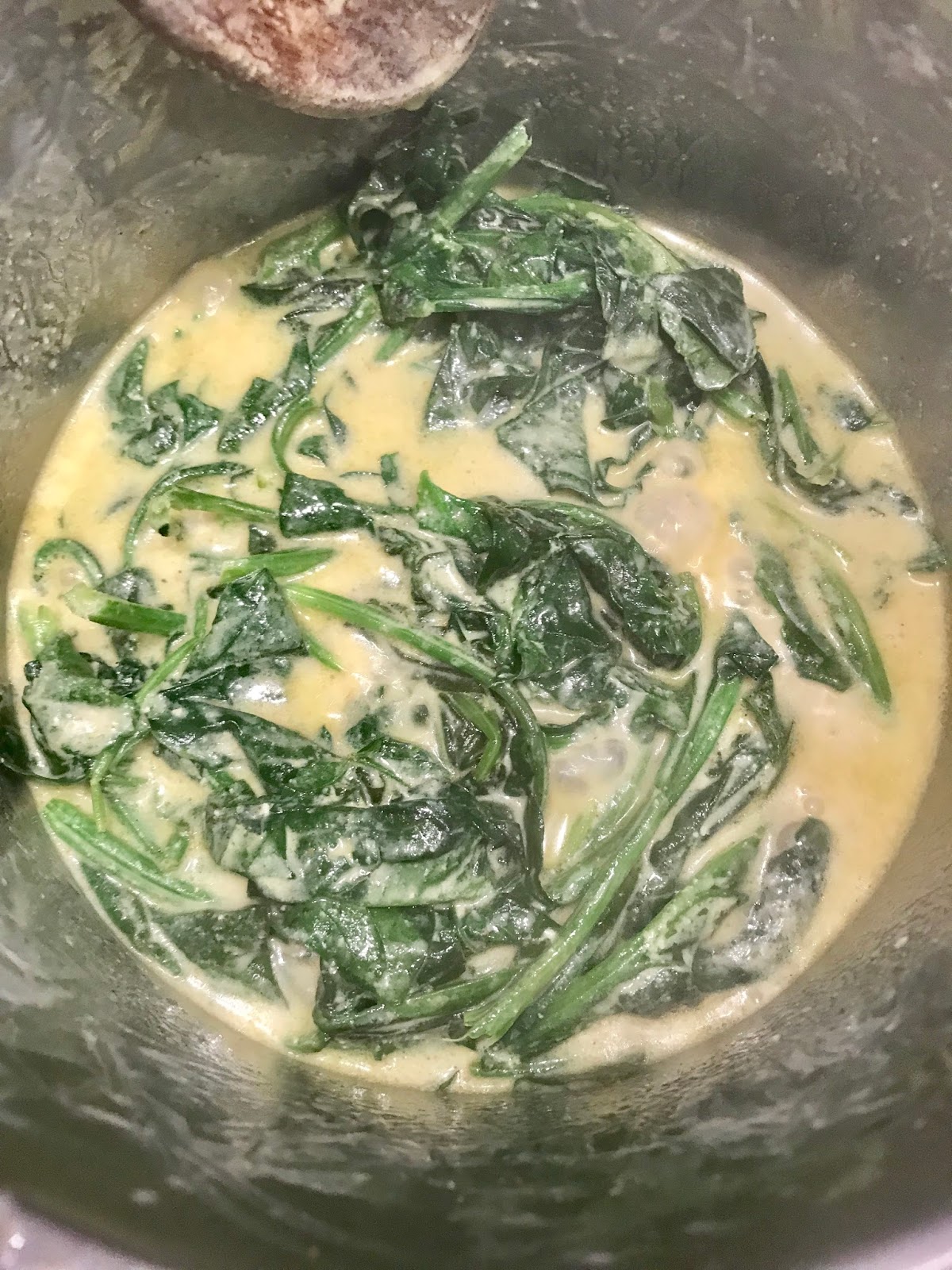
Creamy Spinach with Tofu on Rice | 忌廉菠菜豆腐飯


This flavourful vegetarian dish is inspired by the Indian dish "saag paneer".  Instead of saag cheese, I used firm tofu here.  It is the healthiest and simplest plate for dinner on a weekday.


INGREDIENTS:
1 package Extra Firm Tofu
8 cups Spinach (not baby spinach), rinsed
4 Garlic Cloves, roughly chopped
1/2 cup Greek Yogurt, plain
3 tablespoons Curry Powder
2 teaspoon Turmeric
1 tablespoon Cumin Powder
1 teaspoon Ground Ginger Powder
3 tablespoons Water
3/4 teaspoon Salt
5 tablespoons Vegetable Oil

材料:
1 磚  硬豆腐
8 杯  菠菜,洗淨
4 瓣  蒜頭,切粒
1/2 杯  希臘乳酪,純味
3 湯匙  咖哩粉
2 茶匙 薑黃粉
1 湯匙  小茴香粉
1 茶匙  薑粉
3 湯匙  水
3/4 茶匙  鹽
5 湯匙  菜油


DIRECTION:
1. Put firm tofu between two plates.  Place a heavy object on top for about 20 minutes; discard the excess water and dry the tofu with paper towel.  Cut the tofu into big cubes.

1. 置豆腐於兩只碟中間;放上重物把多餘水份壓出。若20分鐘。用廚紙印乾豆腐,把其切成方塊。


2. Heat up 2 tablespoons of oil in a non-stick pan over medium heat.  Add chopped garlic and tofu cubes.  Patiently fry until all sides of the tofu turn a golden colour.  Remove the garlic from the pan if it starts to burn; reserve the garlic.  Set tofu aside.

2. 在易潔鑊中倒入兩湯匙油;用中火燒熱。下蒜蓉和豆腐粒;慢慢將豆腐煎至金黃。如蒜粒開如變焦,將其上鑊留起備用。煎好豆腐離火備用。


3. In a clean pot, combine yogurt, turmeric, curry powder, cumin, ginger powder, salt, and 3 tablespoons of water.  Stir well.  

3. 在一只深鍋內,倒入乳酪、薑黃粉、咖哩粉、小茴香粉、薑粉、鹽和好湯匙水。拌勻。


4.Add spinach.  Turn on the heat to medium-high and cook until the spinach is cooked through and becomes totally soft.  Turn off the heat.

4. 下菠菜;把火調至中大火,繼續煮至菠菜變軟。關火。


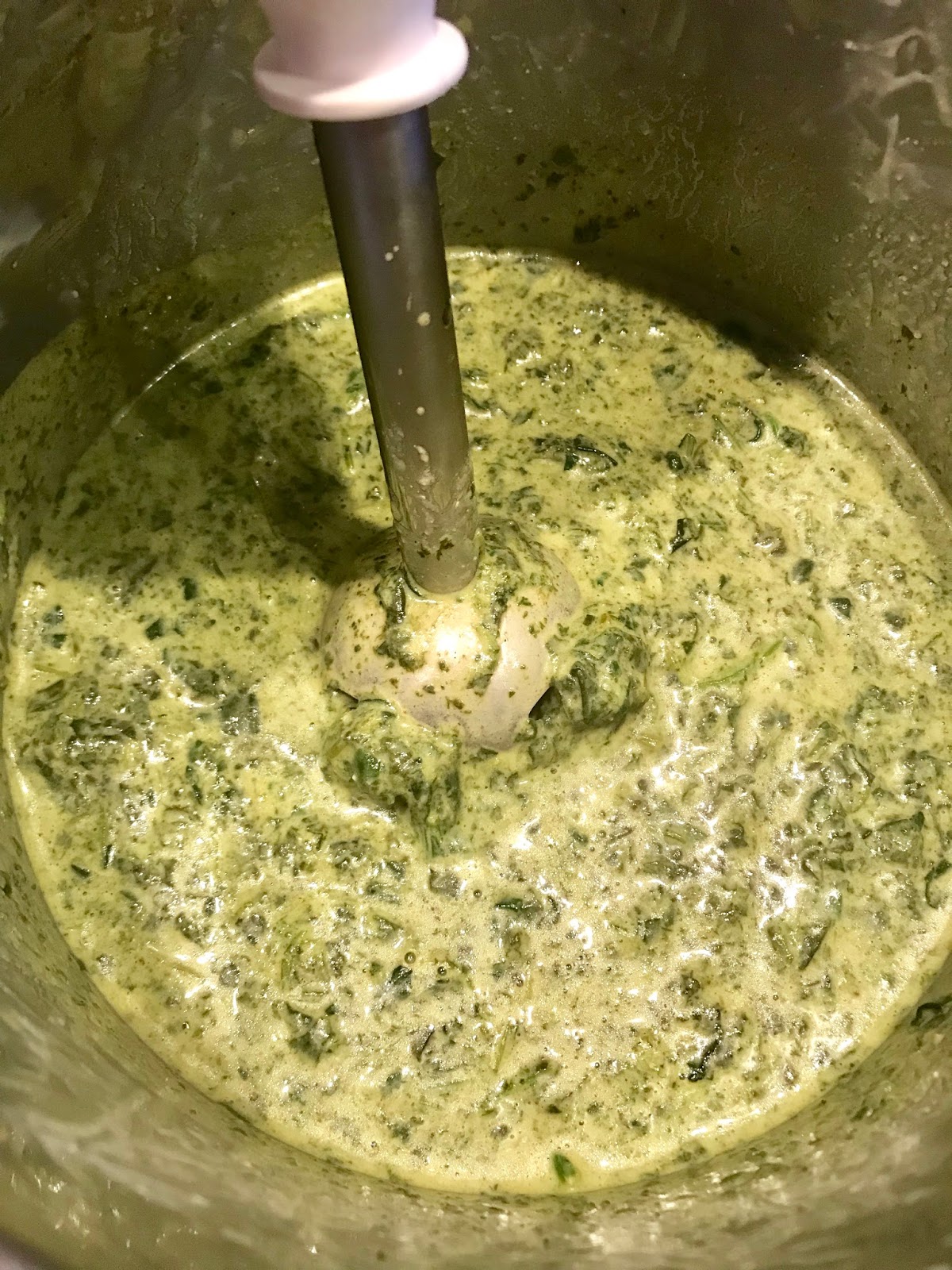
5. Process the mixture with a processor or a blender.  You will want to be easy on the processing time; otherwise, it will result in creamy spinach soup.

5. 用攪拌器把菠菜打至稍為爛身。切勿攪拌過度成了菠菜湯啊!


6. Turn the heat back on to medium.  Add the tofu and fried garlic to the spinach mixture; mix it gently.  Remove the pot from the heat.

6. 把火重開至中火;豆腐回鍋。輕輕拌勻,煮至豆腐回暖便可上桌。


7. Serve it immediately over a plate of steamed rice.
Yummy~

7. 趁熱碗上白飯便是美味~


Thursday, November 16, 2017

Cute Bear Rice Omelette | 可愛熊蛋包飯


Cute Bear Rice Omelette | 可愛熊蛋包飯

Ingredients:
1.5 cups Cooked Rice
3 Eggs
1/3 Onion
1/2 Potato
2 Mushrooms
3 tablespoons Vegetable Oil
3.5 tablespoons Ketchup
1 teaspoon Sugar
1/4 teaspoon Salt
Sliced Cheddar Cheese
Seaweed


DIRECTION:

Wednesday, November 8, 2017

How to make Chestnut Rice | 甘栗飯


It's a recipe which originates from Japan, but I replaced saki with rice wine which is more assessable for me.  Beside the nibbles of sweet chestnut and the fragrance from the rice wine, the beautiful chestnuts give a very appealing look to the rice.


Chestnut Rice | 甘栗飯

Ingredients: (yield about 4 bowls)
10-12 Chestnuts
2.5 cups Japanese Rice
1 teaspoon Rice Wine
Sea Salt to taste


材料:(約4碗)
10-12 粒   栗子
2.5 杯   日本米
1 茶匙   米酒
少量   海鹽


DIRECTION:


Friday, November 3, 2017

Sweet Corn Pork with Rice | 粟米肉粒飯


This is a common dish available in almost all the local restaurants in Hong Kong.  The creamy texture and the simpleness in the dish attracts many people.  Whenever we came home late from work and didn't want to cook, this dish was a very secure choice.  


Sweet Corn Pork with Rice | 粟米肉粒飯

Ingredients:
300 gram Pork, cubed
1 cup Cream Style Corn
100 ml Water
2 Eggs


Marinate:
1 tablespoon Sugar
1 tablespoon Soy Sauce
1 tablespoon Corn Starch
1/2 teaspoon White Pepper
1/3 teaspoon Salt


DIRECTION:

Saturday, October 7, 2017

Deep fried Eggplant with Paprika and Sea Salt | 香炸矮瓜


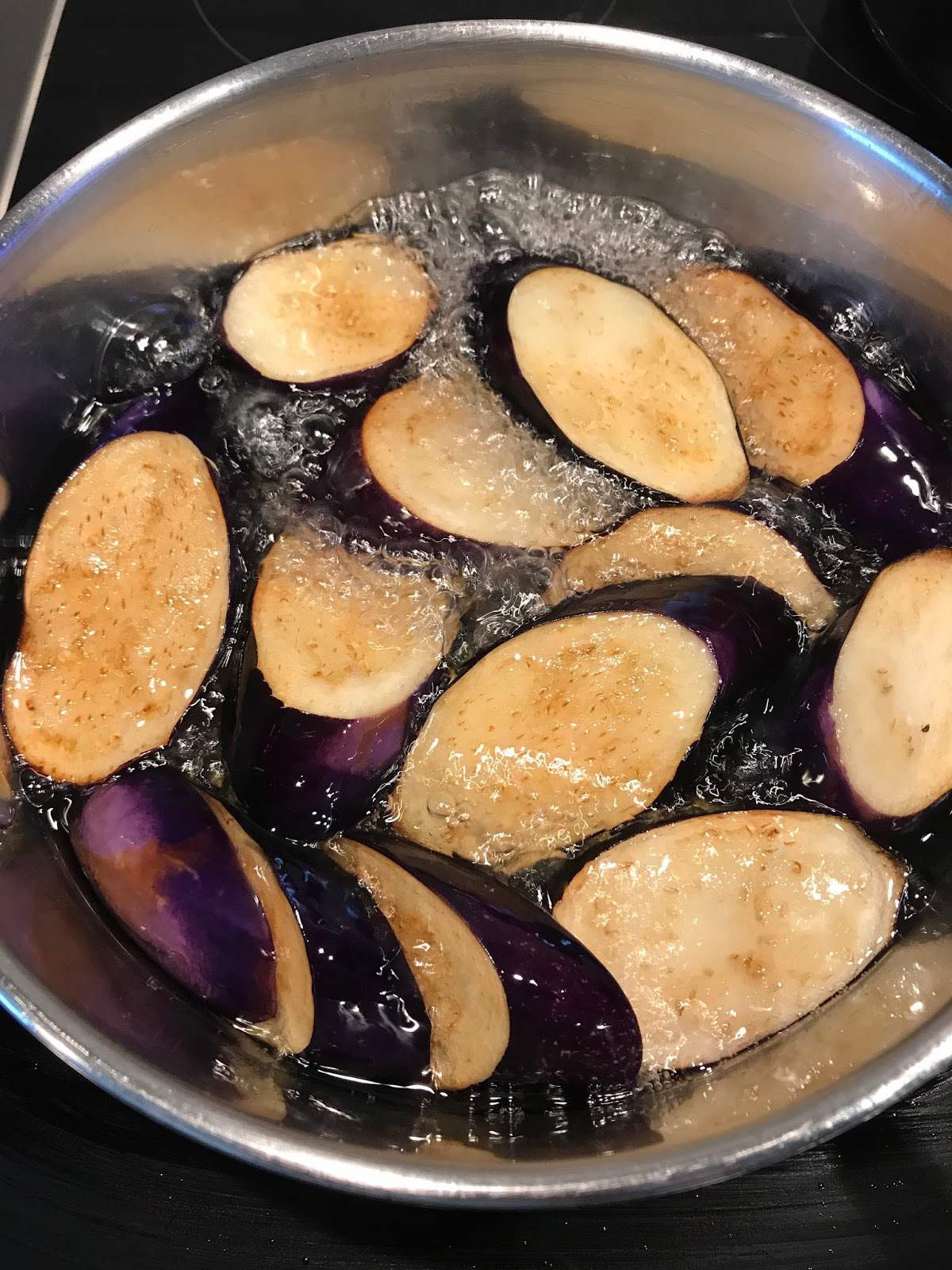
If you don't mind to deep fry at home, this recipe will be an easy, delicious, and fit-for-budget option for your lunch and dinner.  Try to use a wide but deep frying pan to do the "shallow-pan" frying method.  It can fry many eggplant slices at one time without using so much oil.

Whenever I make this dish, I ensure I make a large enough portion to last for two days.  Overnight, the eggplant will become softer and the taste more integrated.  Eating it with a bowl of piping hot rice is happiness.

Other than paprika, you can serve it with scallion, fried shallot, five spice powder, or a dollop of yogurt.


Deep fried Eggplant with Paprika and Sea Salt


Ingredients:
2 Chinese Eggplants
Oil (for deep frying)
Paprika
Sea Salt


How to make it:
1. Rinse the eggplant.  Cut the eggplant into 2cm slices, diagonally.

2. Heat the oil over high heat.  Add eggplant and do not over crowd them.  Fry them until slightly brown on both sides.  Transfer them to paper towel.

3. Sprinkle with paprika and sea salt.  Serve hot or cold.


Friday, July 14, 2017

Basic Steamed Rice|煮白米飯。甜米茶


A rice cooker is a very essential kitchen appliance for Hong Hong households.  I'd actually never known anyone who didn't have a rice cooker at home if they would ever cook at home.

My mom has always cooked rice in a rice cooker as long as I can remember, but she told me her family used to cook rice in a pot over a wood fire.

"People needed to squat in front of the stove while fanning the fire.  They needed to be very careful not to let the rice burn.  But of course, it happened sometimes," Mom laughed.

Mom grew up in China with my grandparents who I've never met.  They were farmers.  Like many others, they worked a small plot of land from the government to grow rice, sugarcane, and many sorts of vegetables.  After their harvest, they needed to pay a certain portion of rice back to the government as the rent.  "Farming was not a choice.  The government asked you to do it, then you had to do it!" she said.

"We didn't get white rice to eat often.  It was fancy, a luxury,"  She continued.  She explained that the crops often did not grow as well as they expected and they could barely meet their quota.    
"We were not starving like many unlucky people in the street, but yes, we never felt full.  To fill our stomach without eating too much rice, we added sweet potato into the rice and make congee.  It was cheap and filling.  Perhaps I ate sweet potato too much back then and now I rarely want it." Mom said with a light smile.

"So you never had normal white rice until you came to Hong Kong?" I asked.

"I did.  Your grandma would cook white rice during Chinese New Year.  Everyone would have a small bowl.  We would just hold the bowl in our hands, admiring the fluffy white rice and not really wanting to eat it.  When we ate it, we really savoured every grain of it," Mom said.

"Wow, it's not easy," I said, feeling myself very lucky.

"At home, your grandma and your aunt were responsible for cooking, and they didn't like me to hover around the kitchen while they worked so they would ask me to go outside to play with the neighbours.  I didn't need to cook until I met your dad and had you three," Mom continued.

"So you didn't learn how to cook rice the traditional way?" I asked.

"No. Honestly who will still use a pot to cook rice nowadays?  The rice cooker is clean and convenient, and you can forget about it after pressing the start button," Mom said, and started rinsing her rice for the dinner.

For years, I thought my mom was right about the evolution of the rice cooking method.  It wasn't until I went on a camping trip with my husband and my son years later, that I couldn't bring my rice cooker.  It was then that I discovered cooking rice in a pot is a true art.

We were making steamed rice for the sushi at the camp.  Funny to see we didn't even have a table and we needed to prepare food on a cooler.
I know many Canadian campers enjoy bringing hotdogs, burgers, or steaks on their camping trips.  Because these foods are convenient to cook and store.  But for Hongkongers, camping means a pot of instant noodles, a pot of rice with lap cheong (Chinese sausage) or even sushi.  My husband and I didn't want to eat any hot soup during the hot days, so we decided to make sushi.  Sushi needs rice, so I must cook the rice over the flame.

After reading many recipes, I came to the conclusion that a cup of rice to two and a half cups of water was the best recipe.  However, the rice was mushy on the outside and still hard in the core.  We had very unusual sushi for the camping supper that night.

The second time I tried to cook rice in a pot was learning to make pilaf with an Italian chef at culinary school.  I followed all the instructions carefully and was told that the pilaf looked fluffy and tasted great by my classmates.  But the chef disapproved of it.  "You Chinese only know how to cook rice in a rice cooker.  That's why your rice tastes awful, " he said.  Of course, I disagree with his generalization about Chinese and his manner toward me.  But this incident brought up the spark inside me that I wanted to prove him wrong.

A few weeks ago, my rice cooker broke down.  In that moment, not knowing what to do, I recalled a traditional Chinese recipe.  It is different than the many English versions of rice making and I found it is easier to work with.

Also, keep practicing is one of the keys.  I remember for the first few days, my husband and my son seriously complained about the rice.  "They are just not consistent.  Some part is mushy, and some part is hard.  How about I just get a new rice cooker?  Just take it easy." My husband even tried to lure me away from my rice experiments.  I insisted on using the pot.  I really wanted to master this traditional skill.

After a full week of practice, I finally learned the key to making fluffy rice.  Now I can proudly say to my husband that we don't need a new rice cooker.

Thanks for stopping by and reading my lengthy story.  I hope you find this recipe useful.


Basic Steamed Rice
1. Add the desired amount of rice in a pot. The pot should be deep enough that the water will not spill easily.

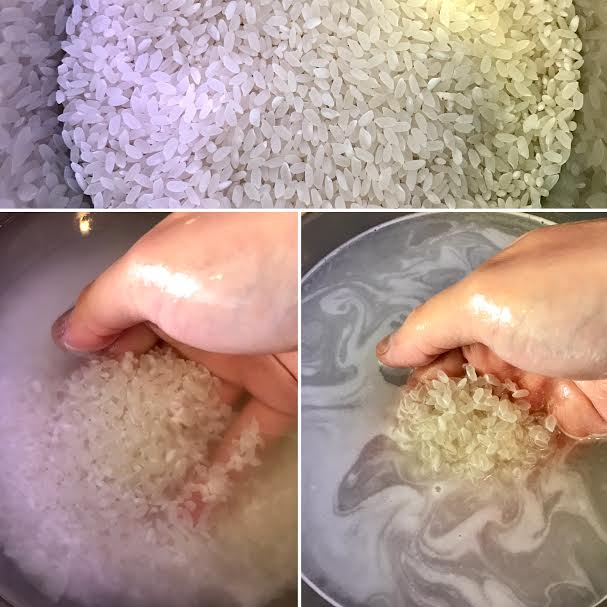
2. Rinse the rice a few times with a few changes of water until the water is clear.  The water won't be totally clear, but it should be clear enough to see through to the rice.

I was watering the radishes with the rinsed water.The first two changes of rinse water is actually packed with nutrition.  You can pour it over plants as extra plant food.


3. Stand a finger in the middle of the pot and fill the pot with water.  The level of the water should be double the level of the rice.


4. Bring the rice to a boil over high heat, uncovered, until the liquid is nearly absorbed; about 4-5 minutes. Stir it once during the process gently to prevent it from sticking.

5. Reduce the heat to low and cover the pot.  Continuously cook the rice for exactly 8 minutes.


6. Remove the rice from the heat and leave it for about 5-10 minutes without opening the lid.  The remaining heat and steam will help the rice prevent from sticking the bottom of the pot. Gently fluff the rice and the rice is ready.

You may find some crispy rice on the bottom (when you didn;t keep it aside for extra 5-10 minutes after it is done).  Don't waste it!  That crisp and hard rice is actually a wonderful ingredient for making a sweet rice tea that is commonly served in Korean restaurants.


Sweet Rice Tea


Ingredients:
Crispy cooked rice in the pot
1.5 cups of water
Sugar to taste


How to make:
1. Burn the rice without water over high heat until the rice turns lightly brown.  Don't over do it or the tea will be too bitter and it's unhealthy for consumption.


2. Add 1-2 cups of water to the pot.  Scrub the rice vigorously with a spoon.  Let the tea boil for another 30 seconds and then remove it from the heat.  Season the tea with sugar to taste.


Roasted Butternut Squash Soup | 烤葫蘆南瓜湯

Compare to the non-roasted version, roasted butternut squash instead brings a tremendous different in the flavour.  The caramelized s...