Showing posts with label wild. Show all posts

Sunday, June 25, 2017

Mugwort Agar Agar - wild edible recipe | 艾草大菜糕


Mugwort is one of my favourite wild edible greens.  It has a unique herby flavour that goes really well with dairy, and it's rich in Vitamin K.

During May to early June, mugwort grows abundantly along road sides or in parks.  I've been foraging this beautiful herb and drying them to use in later months.


Dried mugwort


To dry mugwort is simple.  All you need to do is give it a very good soak and rinse, and then spread them loosely on a baking tray or any flat surface to be air dried.  Avoid overlapping the mugwort, which is key because it will result in a moldy smell that certainly reflects in the food.

When the mugwort is completely dried, crumble it up by hand and remove as many hard stems or pieces as you can.  The finished product should be soft and fibrous.  Keep it in an air-tight jar at room temperature.

I heard some people use a dehydrator to dry mugwort, but I haven't tried it.  So I am not sure if both method are equivalent or if one is better than the other.  However, dried mugwort has a more intense flavour than the fresh one.

I used dried mugwort in the recipe below, but you're always welcome to use fresh mugwort instead.  They all are delicious.


Thanks for stopping by.  I hope you will enjoy this recipe.


Mugwort Agar Agar
艾草大菜糕


Ingredients:
5 gram Dired Mugwort
2 cups Water
8 gram Agar Agar Block
5 tablespoons Sugar
Milk (to serve)
Grapes (for decoration)


How to make:
1. Combine the mugwort and water in a small pot.  Bring it to a boil, and then reduce the heat to medium-low.  Let it boil for 10 minutes and remove it from the heat.


From clockwise.

2. When the mixture cools slightly.  Blend it in a food processor until the mugwort is finely chopped.  Drain the juice through a tea strainer and discard the mugwort.

3. Pour the juice back to the pot.  Cut the agar agar into small pieces and add them to the pot, followed by sugar.  Bring the liquid to a boil and then simmer it on low heat until the agar agar is totally dissolved; stirring constantly.

4. Pour the mixture in a mould and allow it to cool slightly before transferring it to the fridge.  Chill the agar agar until it is set; about 15-20 minutes.  Serve with cream or milk, along with any fruits that are desired.


Saturday, April 29, 2017

Japanese Knotweed - wild edible


Have you seen Japanese knotweed before?  It is a beautiful plant that may remind you of bamboo.  I think it was the reason why knotweed was introduced to North America from Japan as an ornamental plant long time ago.

In Japan and China, people are more focused on the medical benefits of the knotweed.  Knotweed contains a high amount of resveratrol, a potent antioxidant compound that can also be found in red grape skin or blueberry.  I'm not an expert on this one so I can't tell you much about how this organic compound works in our body.

For me, knotweed is a gift from nature and it tastes wonderful.  It has the tangy and subtle sweet flavour that resembles rhubarb.


Knotweed on the left, and horsetail grass on the right

Before I came across Japanese knotweed, I more often encountered horsetail grass, a species that looks very much like knotweed.  However, you can distinguish them very easily. 

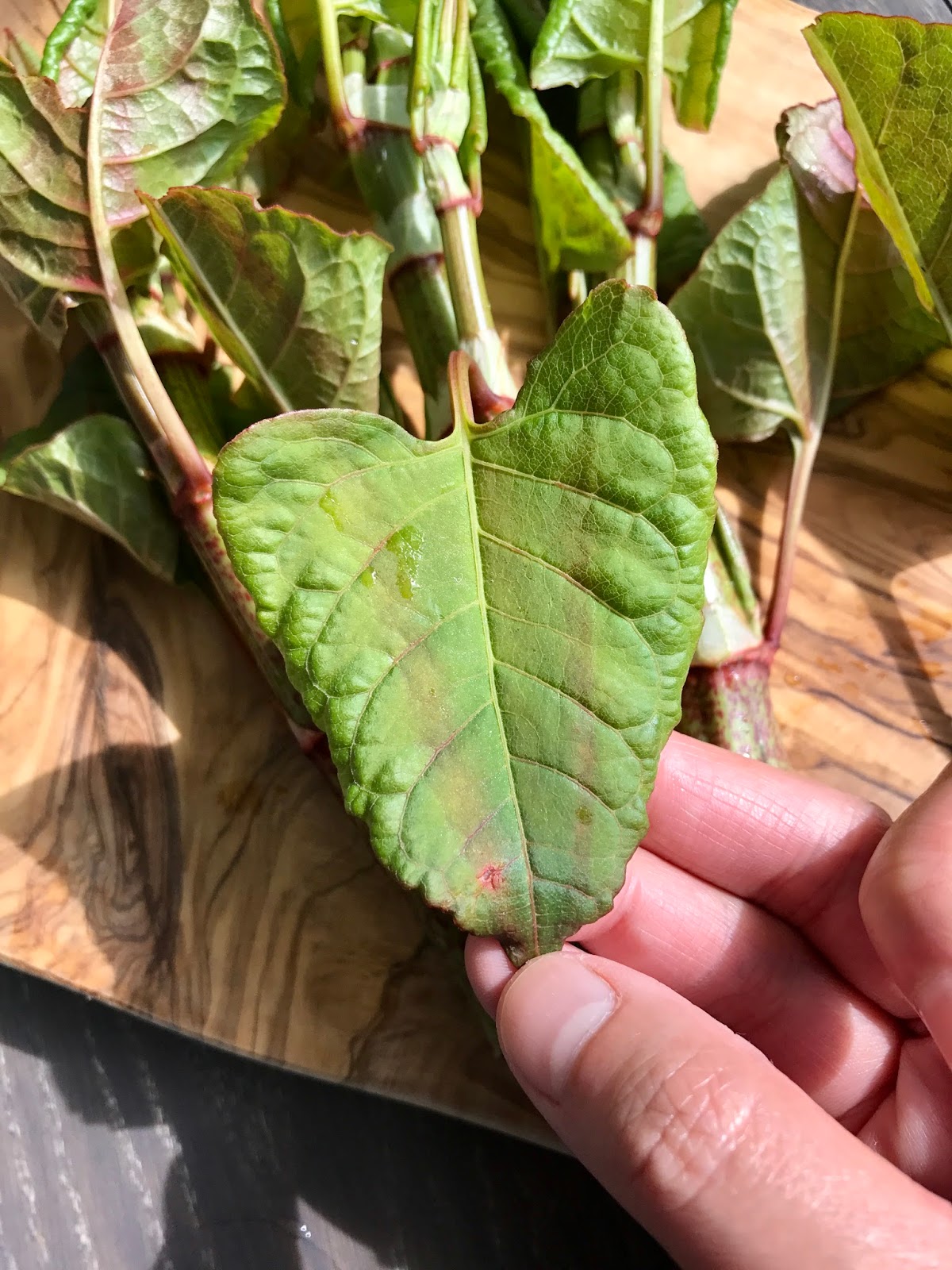
In spring, Japanese knotweed is plump and round, and has reddish purple dots.  The leaves are heart shaped with two subtle purple lines on each.  Horsetail has no spots on the stem, and it has papery texture.  Both species are bamboo-like and invasive; however, knotweed is edible and the other is not.


A young leaf of the Japanese knotweed.  The two lines will subside when the leaf grows more mature.


Knotweed

Young knotweed usually starts to come out in early April.  This fast growing species can grow nearly 10 cm each day up to 3 meters in height, and the root can spread up to 10 feet in depth.  The root system is very vigorous and can even break through concrete, causing much damage in houses or roads.  A strong reason why our Government wants to get rid of it and puts it under the Invasive Special Act.  I think our government has done a very good job because I rarely see knotweed around to forage anymore.
  
When foraging knotweed, we look for the young shoots that are easy to break off and are no more than 6 inches tall. Past this stage, the plants will start to become woody and will no longer be good for consumption.

Since Japanese knotweed tastes tangy and sweet, I used it to make some knotweed jam for the yogurt dessert.


Japanese Knotweed Jam

Ingredients:
1/2 cup Young Knotweed Shoots
3 tablespoons Sugar
3 tablespoons Rum Raisin

I infused the raisin three years ago and I only use it for special dessert.  If you don't have some on hand, just use raisin and a splash of rum.  Or just omit the rum.


How to make:
1. Rinse the knotweed carefully; cut it into bite sized pieces.

2. In a non-stick pot, add the knotweed and a cup of water.  Bring it to a boil and cook continuously until the knotweed is totally soft and the liquid has almost evaporated. It takes about 5 minutes.

3. Pour the cooked knotweed in a blender, including the cooking liquid.  Add raisin.  Pulse until the mixture incorporates.


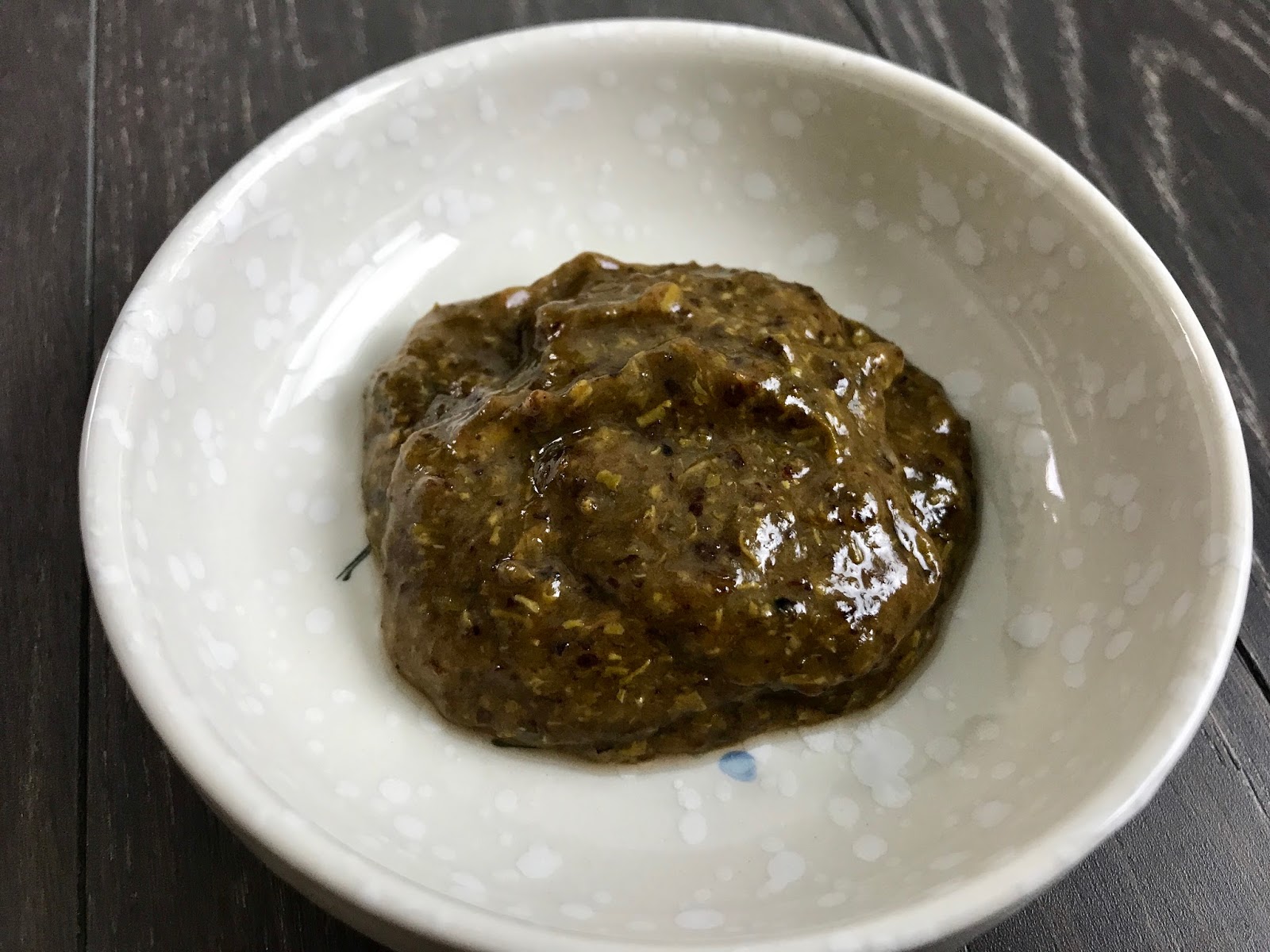
Japanese knotweed Jam


Da, da, da, da~

It is the dessert for tonight.  I must say it feels great to eat the food I forage or grow with my own hands.  There is a bond between the nature and the me inside.


Knotweed jam on greek yogurt, plus some hemp seeds and bean cracker for the garnish.


Roasted Butternut Squash Soup | 烤葫蘆南瓜湯

Compare to the non-roasted version, roasted butternut squash instead brings a tremendous different in the flavour.  The caramelized s...