Showing posts with label foraging. Show all posts

Wednesday, May 6, 2020

Wild edible - Stir-fried Wild Onion and Pork Belly


Every year, my family will go to forage wild onion in the early May. They grow among the river like grass, but with distinctive onion and garlicky scent. You can substitute the wild onion for leeks to make this dish.


The look of wild onion


Ingredients:
1 bundle off Wild Onion
250 gram Pork Belly
1 tablespoon Chinese Cooking Rice Wine
3 tablespoons Soy Sauce
1/4 taking Salt
1 tablespoon Sugar
2 tablespoons Vegetable Oil

Direction:
1. Cut the pork belong into 1/2 cm slices. Cut the wild onion into sticks. 

2. Heat up vegetable oil over high heat. Add pork belly. Stir fry until it turns colour; about 2 minutes.

3. Drizzle cooking wine and soy sauce. Add sugar and salt. Stir fry untilThe pork belly is nearly cooked, about 3 minutes.

4. Add wild onion. Continue to fry until it is wilted. Turn off the heat and transfer it to a serving plate. 


Garlicky Wintercress Bud Salad


In early May, the wintercress starts to come out and forms flower buds. The wintercress is very tender at this time of the year. If you want to get rid of the bitterness, blanch it in water for about 3 minutes.


The look of wintercress


Ingredients:
1-2 handfuls Wintercresses
3 Garlic Clove
3 tablespoons Soy Sauce
4 tablespoons Vegetable Oil

Direction:
1. Peel the garlic. Chop it into fine pieces.

2. Bring a pot of water to a boil over high heat. Add wintercresses. Boil until they are soften; about 2-3 minutes.  Drain and transfer them onto the serving plate.

3. Top the chopped garlic on the wintercresses.

4. Heat up the vegetable oil. Drizzle over the garlic to make it fragrant.


Monday, April 20, 2020

Wild Dandelion Salad with Honey Balsamic Vinaigrette Dressing 蒲公英沙律


Dandelion is coming back. While many people may not like to see these popping yellow flowers, my husband and I are very happy to welcome them back with open arms. We miss the flavour. The mildly bitter leaves with the sweet balsamic vinaigrette. And the bright yellow flower petals that are so delicious in cookies. We just never have enough of dandelion.

INGREDIENTS:
1-2 cups Dandelion Leaves
3 tablespoons Balsamic Vinegar
2 tablespoons Olive Oil
1 tablespoon Honey

DIRECTION:
1. Rinse the dandelion; drain well.

2. Whisk together balsamic vinegar, olive oil, and honey. Add dandelion leaves; gently mix together. Serve immediately.


Stir fried Fiddle Head in Butter Sauce


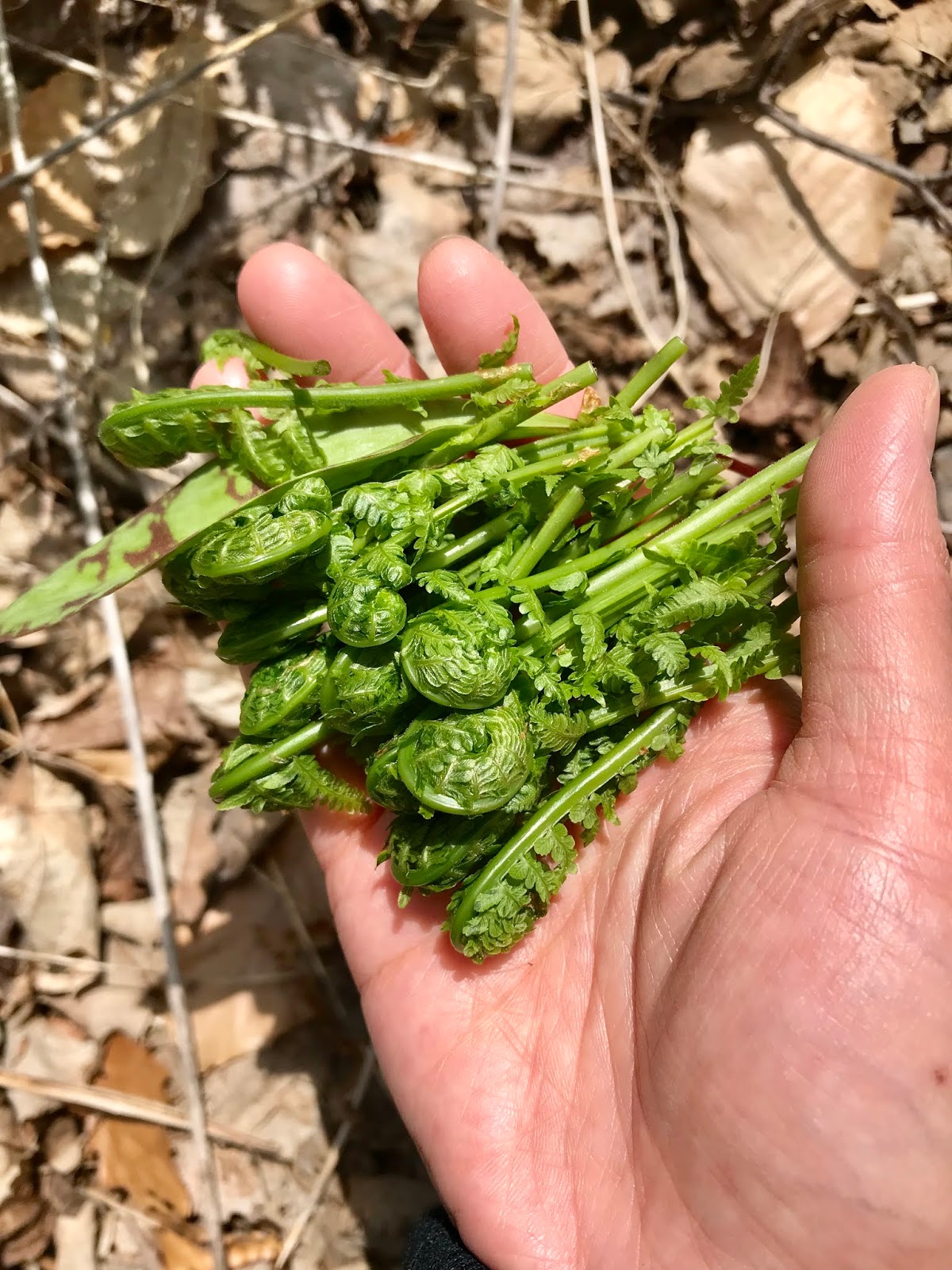
It is spring. It means the fiddle head are coming out. On one of the hike, we found an area where full of fiddle heads. We keep the place as our secret to protect the resource. When picking fiddle heads, look for the ones still close tightly. And you will never want to pick out the whole plant or the clean out the whole area, if you want to come back for the same spot every year.

Fiddle head is tender and sweet. It is the beast wild green I'd ever tasted, and it is still on the top of the favourite wild edible list among my family. Cooking fiddle head doesn't need to be complicated. Instead, the simplest, the better. However, blenching it prior is essential for getting rid of the bitter taste.

Hope you enjoy this spring recipe.

Look for the fiddle heads are still closing tightly. As they open up, they become poisonous and are no longer safe for eating. 

INGREDIENTS:
1-2 handfuls Fiddle Heads
2 tablespoons Butter
Salt to taste


DIRECTION:
1. Bring a small pot of water to a boil over high heat. Add fiddle heads. Boil them for about 5 minutes. Drain well.

2. Heat up the butter. Add blenched fiddle heads. Fry until they are wilted; about 5 minutes. Season with salt to taste.


Mugwort Dumpling Red Bean Soup 艾草紅豆甜湯


Around Mid May, you will start to find mugwort growing on the road sides or among bushes. My husband and I like to pick a bunch whenever we see it. It has a unique fragrance that you won't forget once you smell it once. It is popular to use this wild edible plant to make into the chewy glutinous dumplings and serve them with sweet bean soup.

INGREDIENTS:
1 cup (packed) Mugwort, young leaves only
1/4 teaspoon Baking Soda
1 cup Glutinous Flour
1/2 cup Water
1 pack Red Bean Paste (store bought)

DIRECTION:
1. Pick the young leaves off the stems; rinse off the dirt.


2. Bring a pot of water to a boil over high heat. Add baking soda and mugwort. Boil until the mugwort soften; about 5 minutes. Drain well.


3. In a processor, add the cooked mugwort and about 1/2 cup of water. Blend until the mugwort is totally smooth.


4. In a mixing bowl, add the glutinous flour. Slowly add half of the mugwort liquid into the flour. Mix until it becomes dough. If it is too dry, add more mugwort liquid. The texture of the dough should feel like an ear lobe.


5. Set a large pot of water to a boil over high heat. When it comes to a rolling boil, roll a small portion of dough into a ball. Add it to the water. Repeat the process until all the dough is gone.


6. When the boiled dumplings float to the surface, it means they are done. Scoop them out and place them in cold water to stop the cooking process.


7. In a small pot, add the bean paste and some water. Stir and cook over medium heat until the paste is diluted into soup. No need to add sugar. It should be sweet enough.

8. Divide the soup into small bowls. In each bowl, add 6-8 mugwort 
dumplings. 


Wednesday, November 1, 2017

Acorn Cookies | 橡實曲奇


Acorn Cookies | 橡實曲奇

Ingredients:
200 gram All Purpose Flour
200 gram Acorn Meal, LINK
150 gram Unsalted Butter, cold and cubed
1/4 cup Brown Sugar *(I forgot to mention it in the video.  Combine it with the flour and acorn meal)*
4 tablespoon Maple Syrup
4 tablespoons Milk
1/3 teaspoon Salt


DIRECTION:
1. In a mixing bowl, add flour, cold butter.  Rub it with finger tips until the butter resembles a fine meal.  Add acorn flour, brown sugar, and salt; mix again.

2. Add maple syrup and milk.  Mix until it just forms into a dough. The dough should be slightly sticky.


3. Divide the dough into equal portions and roll each into a ball.  Press down the balls onto a baking tray lined with parchment paper.


4. Bake it in the pre-heated oven at 360F for 15-18 minutes.  Allow them to cool before transferring them into an air-tight container.  The cookies will turn harder once cooled.


VIDEO:


Wednesday, October 25, 2017

Hickory Nuts Cookies (wild edible) | 山胡桃曲奇


Late October is a good time for foraging nuts.  Not only for squirrels and chipmunk, but for us too.  We've picked acorns to make cookies, but our favourite nut is hickory.  Hickory nuts contain a high amount of "good fat" and their taste resembles something between a pecan and a walnut.  When it is freshly cracked and baked into cookies, it is an enjoyable moment to just sit and savour the flavour.  You will be amazed how nutty it actually tastes.  I would say it is even better than peanut.

You can buy hickory nuts at the store, but they usually lose the profound flavour and some of the good fat content after the prolonged period of storage.


Picking hickory nuts in the wood and sensing the small animals watching me.


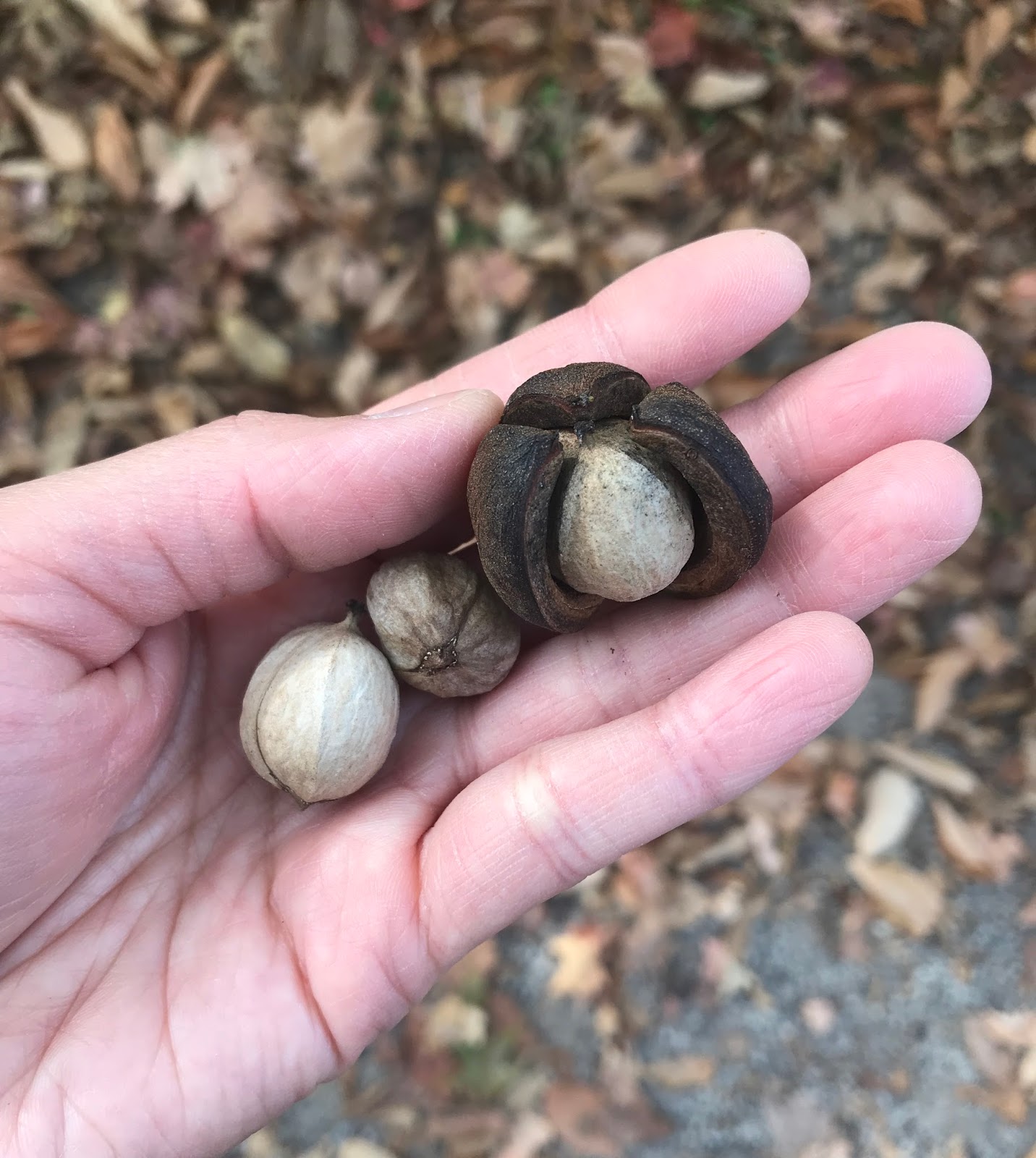
Hickory Nut has two layers of hard shell to protect the delicious flesh.  The outer layer is green, but later it will turn into a deep brown colour, and then it will crack open to expose the second layer of the shell.

The second shell has a much lighter brown colour and it is the layer we need to work on if you want to get to the flesh.
  
In the woods, most of the hickory nuts I found were already out of the outer shell so all I needed to do was just to pick them up and put them in the backpack.
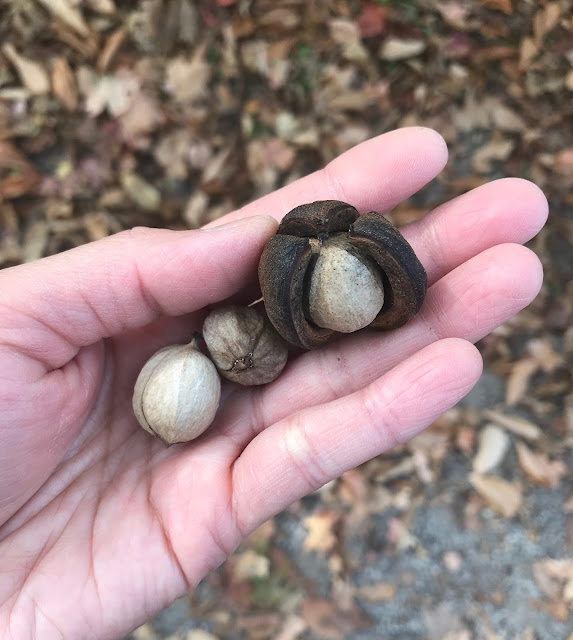

Hickory nuts in their shells.


Hickory Nuts Cookies
山胡桃曲奇


Ingredients:
1/3 cup Hickory Nuts
1/2 cup Butter, softened
1/2 cup Sugar
1 tablespoon Vanilla Extract
2 cups Whole Wheat Flour
a pinch of Sea Salt


How to make it:
1. Rinse the hickory nuts a few times to remove the dirt that sticks to the shells.


2. With a nut cracker, crack open the hickory nuts.


3. Use a sharp tool to take out the flesh.

Or you can use any method that works best for you.  A hammer, perhaps?


It was the result after I worked for three hours.  Eating wild edibles is not always easy, but the fresh nuts was a wonderful trade off.


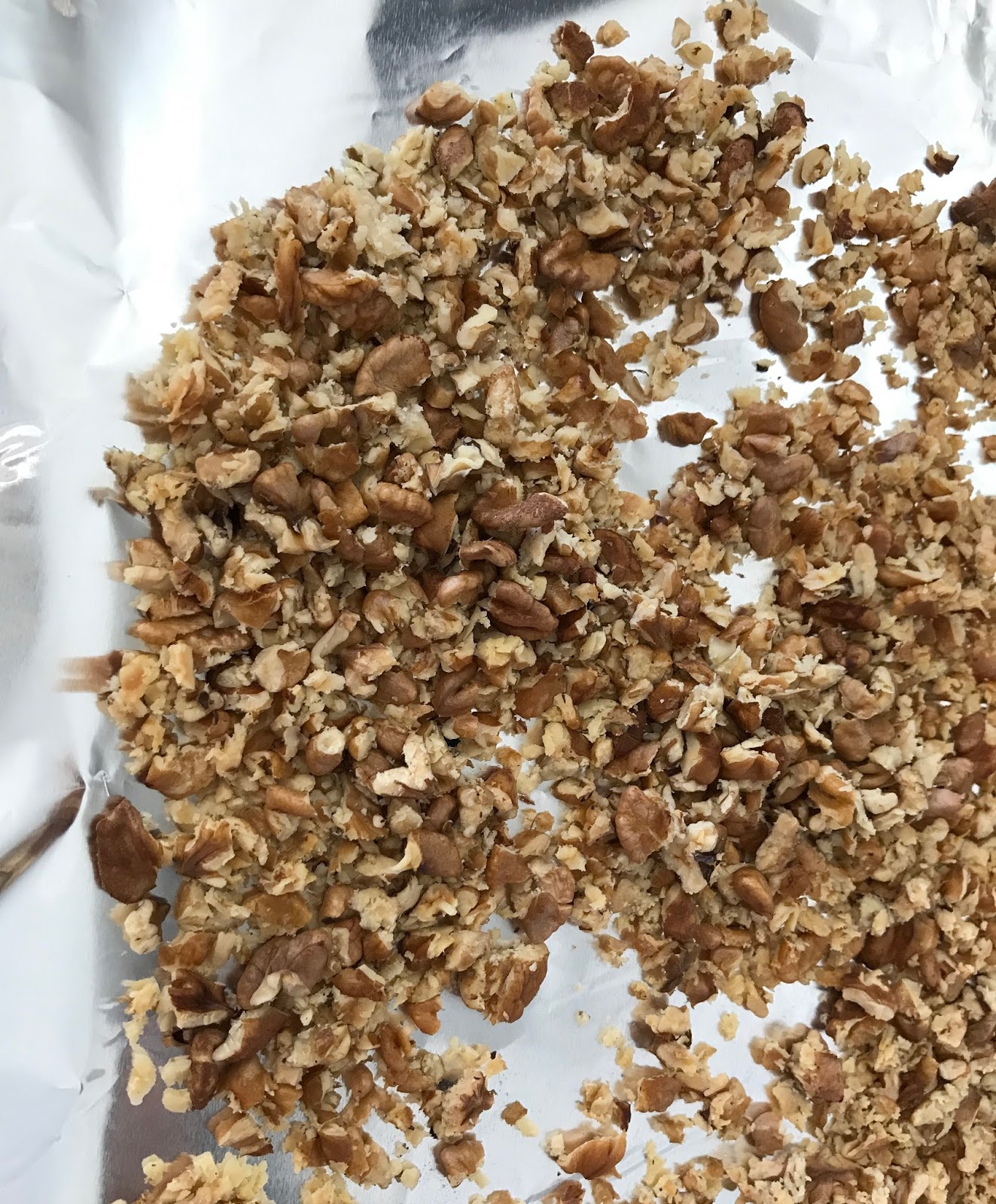
4. Place the nuts on a foiled tray, roast it in the pre-heated oven at 360 F for about 10 minutes, or until they are nicely browned and fragrant.  Be careful not to burn it.  They burn fast because of the high fat content.


5. In a mixing bowl, combine butter, sugar, and vanilla extract.


6. With a fork, mix the ingredients until well combined.


7. Add flour.  Combine and roll it into a dough by hand.  If the dough is too dry, add a few drops of water.


8. Add hickory nuts.  Continuously knead the dough until it is well combined.


9. Place the dough between two pieces of parchment paper.  Roll it out into a 1 cm sheet.


10. Cut out the shape with a cookie cutter and transfer it onto a lined baking tray.


11. If you're not up for shaping the dough, just simply roll the dough into many small balls and press them down with a fork.  (my favourite way to make cookies)


12. Bake the cookies in the pre-heated oven at 360 F for 12-15 minutes and they are ready.


Thursday, October 12, 2017

Red Clover Syrup (The summer syrup) |自製紅花苜蓿糖漿


Early summer is about mulberries and red clovers.  We were about to look for a big batch of red clovers to make syrup.  As soon as we pulled into the parking lot, I spotted a mulberry tree that was full of mulberries.


My son and I were so excited running under the tree and starting to pick the berries on the ground.  It was an easy forage.  Mulberries were laying everywhere.  As the wind kept blowing the tree, it shook off more ripened mulberries around us.  My husband got "hit" by the mulberries a few times, and a big mulberry even dropped right into my paper bag.


Very soon, we filled the small bag and left the rest to the wildlife.  My son often said the birds are watching us while we foraged  because they would be upset if we took too many.  He has a great point.


Mulberry is a common wild edible can be found in many places in the cities and parks.  When foraging them, you will only want the black ones.  The unripe white or red mulberries can cause mild to severe upset stomach or even hallucinations.  If you are picking mulberries with children, make sure they don't put the red ones in their mouths.  Though, the mulberries that have dropped from the tree are mostly ripened.


Left: picking mulberry beside a parking lot; top right: ripen mulberries in soaking water; bottom right: red clovers


We also got lucky with the red clovers.  There were patches of them growing along the walking path.  To make syrup, I always forage only the pink clovers.  They are much sweeter, more floral, and have higher medicinal properties to prevent coughing.


The leaves and the flowers of the clover are edible, but the leaves are somewhat bitter, and we don't really enjoy them as much as the flower top.


This is the clover has the mix of pink and white.  It's edible, but I usually leaf it out of my foraging  since it is not as sweet as the pink clovers.


Hiking in summer, you can also easily find wood sorrel.  They usually grow close to the ground under the bushes or under the trees.  Each wood sorrel is composed of three heart shaped leaves.  The leaves, stems, and the yellow flowers are edible and taste lemony.  My son loves it.  He kept asking me to pick more for him so that he could snack on the hike.  We had a great time that day.


My son was snacking wood sorrel. 


Red Clover Syrup
自製紅花苜蓿糖漿


Ingredients:
2 cups Red Clovers, flower head only
2 cups Mulberries
1 cup Sugar
4 cups Water


How to make it:
1. Soak the mulberries in cold water for 5 minutes.  Drain.

2. Soak the red clovers in cold water for five minutes.  Make sure to remove any sand or small bugs.  Remove and discard the leaves.


3. In a deep pot, mash the mulberries.  Add clover, sugar, and water.  Bring it to a boil over high heat, and then boil it for another 15 minutes.  Strain away the clovers and mulberry seeds.

4. Reduce the heat to medium and continuously boil it until the liquid reduces to 1/3; stirring occasionally.

5. Turn off the heat.  Keep it in an air-tight jar and use it on ice cream, drinks, or goat cheese.


Tuesday, July 4, 2017

Spruce Pine tips and recipes | 嫩松葉食譜


Around early May until mid June, the young shoots of the pine and spruce start to come out from their brownish papery shields.  These bright green young shoots are edible, tender, lemony-pine like, and rich in Vitamin C.   

My family and I were walking in the woods, looking for some other edible plants when we spotted a huge spruce tree that filled with these yummy tips.  Many tips had just emerged, while many others were still waiting for their time.


Young spruce tips are always best collected when they just come out from their papery casings.  After the tips become bigger and the colour turns deeper green, they lose the delicate citrus flavour and I will not collect them anymore.  After a few taste-tests to make sure we found a good tree, we started to collect the tips.

These tips are actually the young shoots of the tree and they will turn into branches and needles once mature.  So we paid careful attention not to accidentally over harvest the tips from the same branch or from the same area.


My son said he had to give each spruce tip a "taste test".


My son wasn't in the mood to stop and watch his mommy pick the spruce tips, which seemed to take forever.  He wanted to keep walking.  He stared at me while I chewed my second spruce tip.


"Do you want to try some? It's delicious." I handed him a tip.  He shook his head.  Frankly speaking, my son often hesitates to try wild edible plants although we forage all the time.  Perhaps many wild plants are rather pungent or bitter for his taste.  My husband and I just have to try different ways to teach him to enjoy the gift from the wild.

"Are you sure? It taste like spring." I nibbled again on the tip and handed it to my son.  "What does spring taste like?" He said curiously.  "Kind of like lemon or some type of citrus, but with the taste of pine," I answered.

He picked a green tip from the tree and took a teeny-tiny bite.  "Mmm, it's so yummy!" He smiled and slowly savoured the rest of the tip.  "Can I have another one?" he asked.  Since I wasn't sure how many pine tips a kid should have per day, I told him he could only have one or two.  Later, I saw him sneaking a few more into his mouth on the other side of the tree.  Well, it's really hard to stop him when there were thousands of tips dangling on the branches in front him.  So, we moved on.


Last week when we visited my in-laws, we found their spruce tree was also filled with the young tips.  My son immediately picked one and introduced it to his grandma and grandpa.


"It's packed with Vitamin C.  You will just need to eat two pine tips to fill your need every day!" my son said, announcing his new find.  Although my in-laws are not wild-edible enthusiasts, they nibbled a little.  "Oh yeah, it does taste a little like citrus, " Grandpa said.

"Just eat two, okay?" my boy said, with a very proud smile on his face.

Thanks for stopping by.  I hope you will enjoy these recipes.


Spruce Tip Sea Salt


INGREDIENTS:
1/2 cup Spruce Tips
1.5 cups Sea Salt


DIRECTION:
1. Rinse the spruce tips with cold water; pat dry.

2. Finely chop the pine tips with a knife.

3. Mix the sea salt with the pine tips and stir until combined.  Loosely cover it with plastic wrap and allow it to completely air-dry; stirring it once every day to even out the drying.  Store it in an air-tight container and it can be kept up to three months.

Pine salt is good to be used on white fish, frittata, or roasted root vegetables.


Spruce Tip Mayonnaise 


INGREDIENTS:
1 cup Japanese Mayonnaise
10 Pine Tips
2 tablespoons Lemon Juice
1 tablespoon Honey


DIRECTION:

1. Rinse the pine tips in cold water; pat dry.

2. Finely chop the pine tips.  Mix it with the rest of the ingredients.  Chill it before using it.  Can be stored in refrigerator for two days.

Spruce tip mayonnaise is delicious as vegetable dip, or served with white fish.


Spruce Tip Sugar


INGREDIENTS:
1/3 cup Spruce Tips
1.5 cup Sugar


DIRECTION:
1. Rinse the spruce tips with cold water; pat dry,

2. Finely chop the spruce tips.  Mix it with the sugar.  Cover the mixture loosely with plastic wrap.  Allow it to completely air-dry; stirring it once everyday.  Store it in an air-tight container and it can be kept up for three months.

Spruce tip sugar is perfect as an additional flavour for cookies and drinks.


Roasted Butternut Squash Soup | 烤葫蘆南瓜湯

Compare to the non-roasted version, roasted butternut squash instead brings a tremendous different in the flavour.  The caramelized s...